
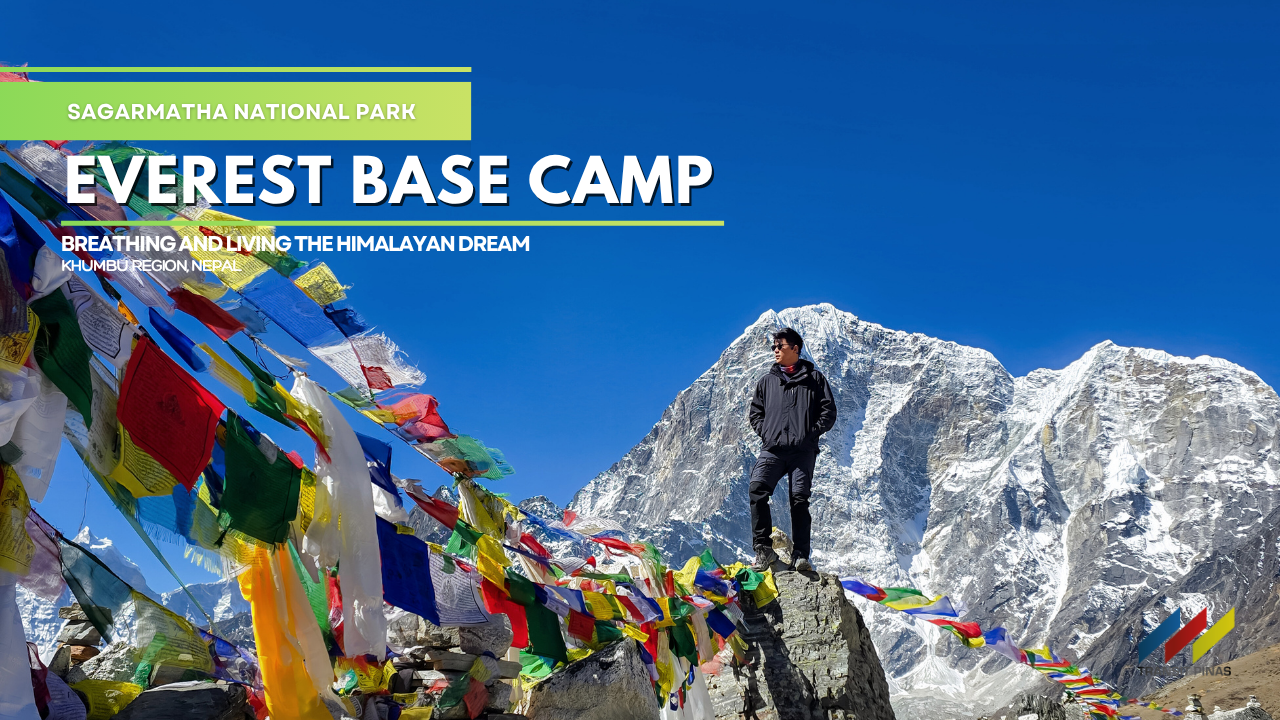
Part II: Everest Base Camp (5,364m) – Breathing and Living the Himalayan Dream
PART II – SAGARMATHA NATIONAL PARK, NEPAL: Fourteen days in the Himalayas. Every grueling step going to the Everest Base Camp tested not just our lungs, but the very core of our mountaineering soul. This wasn’t just a trek; it was an unwavering climb towards a lifelong dream.

The adventure continues! In this second part, I’ll take you on a day-by-day expedition to Everest Base Camp. Experience the magic of the Khumbu as we journey to the sacred ground where legends stand at the world’s pinnacle.
Read more: Part I: Everest Base Camp (5,364m) – Breathing and Living the Himalayan Dream
Everest Unpacked: Our EBC Journey – Part II
Day 7: Dingboche Acclimatization – Pushing Through
Waking up in Dingboche on our seventh day, I knew something wasn’t right. A sore throat had taken hold overnight, quickly escalating into a slight fever. The air felt colder, and every breath was a small effort. My usual enthusiasm for the trek felt dampened.


But our host, Kancha Nuru Sherpa, a man who’d summited Everest multiple times, wasn’t having any of it. He’s seen it all up here, and he knows what it takes. He gently but firmly pushed us to eat, to hydrate, and to keep moving around that day, reminding us that staying put wouldn’t help. His quiet confidence was exactly what I needed.


“The surrounding mountains are imposing, truly making you feel small.”
The village of Dingboche itself sits in a wide, open valley. It’s a bit exposed, with stone walls everywhere to protect the fields from the harsh winds. The surrounding mountains are imposing, truly making you feel small. Water here is incredibly cold, making even simple tasks like washing your hands a challenge.


And as for food, the prices are exactly what you’d expect this deep into the Himalayas – about four to five times what you’d pay back down in Kathmandu. Every potato and every piece of bread feels like a luxury. Even charging and internet come at a hefty cost.

Day 8: Dingboche (4400m) to Lobuche (4950m) – Carrying A Ton to Thukla
Starting Elevation: 4,400m
Ending Elevation: 4,950m
Total Distance: 11km (total of 80km)
Day eight kicked off with a challenge right from Dingboche. The air felt thinner, and every step seemed to demand more effort than the last.


Our goal was Thukla, a small settlement where we planned to grab some lunch. The trek there was tough, a steady climb that warmed us up for what was coming next.


After a quick bite at Thukla, we faced the infamous Thukla Pass. It doesn’t look like much on a map – just a short stretch – but don’t let that fool you. With each step, it felt like I was carrying an invisible ton on my back, pushing down on my shoulders, making my legs burn. The short distance felt stretched out, endless.


“It’s a somber, humbling place, a stark reminder of the mountain’s power and the ultimate cost of chasing such a grand dream.”
But the reward at the top was immediate and profound. As we crested the pass, a vast, open vista spread out before us. The mountains, now much closer and more imposing, seemed to loom in every direction.


And then, there they were: the memorials of the mountaineers who lost their lives on Everest. It’s a somber, humbling place, a stark reminder of the mountain’s power and the ultimate cost of chasing such a grand dream.


From the pass, the trail continued its relentless, gradual ascent to Lobuche (4950m). Now, we were truly deep in the Himalayas. The landscape had transformed. The last of the treeline had vanished days ago, replaced by an alien, rocky terrain. The trail here often snakes along the moraine.

The path is rough, with loose rocks and uneven ground, demanding constant attention. It’s not just uphill anymore; it weaves, dips, and climbs over the vast, open expanse. The colors are muted – grays, browns, and whites – broken only by the sharp, brilliant blues of the sky and the occasional distant snowfield.

The air bites with a crisp coldness. Every turn offered a new, breathtaking view of towering peaks, some known, some anonymous, all magnificent. You realize just how small you are in this immense, powerful landscape.

Reaching Lobuche felt like a significant milestone, not just in terms of altitude, but in truly entering the high-altitude world of Everest.


Day 9: Lobuche (4950m) to Gorak Shep (5150m) – The Final Push
Starting Elevation: 4,400m
Ending Elevation: 4,950m
Total Distance: 7km (total of 87km)
Today was the day we truly felt the mountains closing in. Leaving Lobuche, the trail immediately felt different. Gone were the gentler, winding paths of the lower valleys.


“Every step demanded focus, especially with the thin air already making us feel heavy-footed.”
Here, it was rocky and uneven, a constant scramble over loose stones and boulders. Every step demanded focus, especially with the thin air already making us feel heavy-footed.


The path hugged the side of the Khumbu Glacier’s lateral moraine. This meant we were walking on a ridge of rocky debris, with the vast, ice-covered glacier hidden just out of sight to our left. It was a relentless up-and-down trail.


We’d gain a little elevation, then drop into a small hollow, only to climb back up again. There was no real flat ground to catch a break.


The landscape was stark, stripped bare by the altitude and the cold. There were no trees, just hardy shrubs clinging to the rocks, and the occasional prayer flag flapping in the biting wind. The air grew colder with every meter we gained, and the wind seemed to pick up, carrying fine dust and chilling us to the bone despite our layers.


This section of the trek wasn’t about beautiful views of rhododendrons or quaint villages. It was about endurance. Each incline felt steeper, each breath more labored. We moved slower, deliberate steps, heads down, focusing on the ground directly in front of us.


The silence was broken only by our heavy breathing and the crunch of our boots on the stones. It was clear we were entering a different world, one less forgiving but utterly magnificent in its harshness.

Gorak Shep, our stop before Base Camp, felt like an incredibly distant but necessary milestone.


Day 10: Gorak Shep (5150m) to Everest Base Camp (5364m)
Starting Elevation: 5,150m
Ending Elevation: 5,364m
Total Distance: 4.6km (total of 91.6km)
The air at Gorak Shep was thin and bitingly cold, but my insides were a furnace of anticipation. This was it. The morning of our tenth day was signaled by helicopters passing by. We were heading to Everest Base Camp (5364m).

“You’ll never actually go there.” It felt too big, too grand, too out of reach.
For years, this place was just a name in books, a dot on a map, a far-fetched dream I often dismissed as impossible for someone like me. I’d scroll through photos, read countless stories, and each time a voice in my head would whisper, “You’ll never actually go there.” It felt too big, too grand, too out of reach.


But here we were. Every single step from Paiya, every labored breath on the inclines, every icy morning, had led to this moment. The trail from Gorak Shep was rocky, winding through a lunar-like landscape of moraine and ice.


The silence was immense, broken only by the crunch of our boots and the distant rumble of seracs calving. With each rise, I half-expected to see it, the iconic stretch of colorful tents nestled against the Khumbu Icefall.


Everest Base Camp (5364m)
Then, there it was. Not a sudden reveal, but a gradual unfolding. First, a splash of yellow, then red, then blue. Tents and domes. Lots of them. Tiny against the colossal backdrop of Everest’s neighbors. A shiver ran down my spine that had nothing to do with the cold.


This wasn’t a picture anymore; this was real. My eyes welled up, blurring the already surreal scene. It was hard to believe I was walking on the ground that I’d only ever seen in blogs and videos where Sir Edmund Hillary and Tenzing Norgay Sherpa once stood.


“All those years of telling myself it was impossible melted away, replaced by an overwhelming sense of disbelief and pride.”
Reaching the vandalized rock that marked Everest Base Camp (5364m) felt like stepping into a dream. I touched it, just to confirm it was solid.


All those years of telling myself it was impossible melted away, replaced by an overwhelming sense of disbelief and pride.

It wasn’t just a physical accomplishment; it was the shattering of a deeply held belief that some dreams are simply too big. It was not about conquering the mountain, but conquering yourself and your deep-seated fears.

Standing there, gazing up at the notorious Khumbu Icefall and the towering peaks, I realized that the only impossible dreams are the ones you never chase.

Today, I chased mine, and I caught it.


Day Ten: Everest Base Camp (5364m) to Lobuche (4950m)
That morning, after weeks of anticipation, we finally stood at Everest Base Camp (5364m). The air buzzed with a quiet triumph, and though the wind was sharp, it couldn’t touch the warmth spreading through us. We took our photos, breathed in the thin, crisp air, and let the sheer scale of the place sink in. It was everything we’d imagined and more.

Looking up at the Khumbu Icefall, seeing the tents of climbers preparing for the summit, you felt like you were truly at the heart of something immense.
But after soaking it all in, it was time to turn back. We began our descent, heading towards Lobuche (4950m). Despite the physical effort of the journey, the miles melted away easily.

We were filled with a kind of quiet joy, a deep satisfaction that showed in the wide, easy smiles we carried with us. Each step down felt lighter, knowing we had achieved our goal. The landscape, which had seemed so daunting on the way up, now felt like a familiar friend welcoming us back.


Day Eleven: Lobuche (4950m) to Tengboche (4400m)
The next morning, we set off from Lobuche (4950m), covering a significant distance of 20 kilometers as we continued our journey downhill.


Our destination was Tengboche (4400m). The trail wound through valleys and across suspension bridges, with the sound of prayer flags fluttering in the breeze.


We passed smaller villages, where the local life hummed along, a stark contrast to the high-altitude wilderness we had just left. The air grew noticeably thicker with each kilometer, making breathing a little easier, a subtle reminder of our progress back to lower elevations. The hot shower here, after six days, was a 10 out of 10.
Day Twelve: Tengboche (4400m) to Benkar (2610m)
Day twelve was a big one for descent. We left Tengboche (4400m), passing through Namche Bazaar, then aimed for Benkar (2610m), covering a long 21 kilometers. This part of the trek felt like coming home.


The landscape changed. We saw more trees and heard the sounds of rivers rushing by. The air became much warmer, and the feeling of thin air became a distant memory. Our bodies, tired from the ascent, now found a rhythm in the downward journey, though the long hours still tested our stamina.


We passed through more populated areas, seeing more local people going about their daily lives, which was a welcome change after days spent in the high mountains.


Day Thirteen: Benkar (2610m) to Surke (2312m)
From Benkar (2610m), our trek on day thirteen was shorter, leading us to Surke (2312m). This day felt like a gentle winding down. The trails were less steep, and we could take our time to enjoy the surroundings. The temperature was comfortable, and we often found ourselves walking through shaded paths.


We reflected on the incredible journey, the challenges we overcame, and the unforgettable sights we had witnessed. The closer we got to the end of the trekking part of our adventure, the more we savored these final moments on foot in the mountains.
Day Fourteen: Surke (2312m) back to Kathmandu
Our final day of the journey began in Surke (2312m). This was the day we officially left the trails behind and reconnected with the outside world. We boarded the same type of 4×4 jeeps that had brought us into the region weeks ago.

The long, bumpy ride back to Kathmandu was a transition, moving from the quiet, majestic mountains to the busy streets of the capital. We passed through small towns and farmlands, watching the landscape shift from remote mountain villages to bustling city life. It was a clear reminder of how far we had come, not just in distance, but in experience.


Arriving back in Kathmandu felt surreal, a mix of relief and a lingering sense of awe from the incredible journey we had just completed.
–END OF EVEREST BASE CAMP TREK–
Total Distance Covered: 149 kilometers
Total Elevation Gain: 7,222 meters

The Everest Effect: How One Trek Changed Everything
It’s often said that mountains transform those who venture among them, and Everest Base Camp proved it even further.

“..it was a journey inward, stripping away the non-essentials until all that remained was raw determination.”
The trek wasn’t just about reaching a physical destination; it was a journey inward, stripping away the non-essentials until all that remained was raw determination.

Every sunrise over a jagged peak, every hard-won step, forced a confrontation with my limits—and then pushed them further. This place redefines what you believe you’re capable of.

You don’t just trek to Everest Base Camp; you leave a part of your old self behind and emerge as a new version of yourself with the quiet certainty that if you can stand here, at the threshold of the world’s highest mountain, then no dream is truly beyond your reach.
Pheri bhetaula, Sagarmatha!

Part II: Everest Base Camp (5,364m) – Breathing and Living the Himalayan Dream
 Updated August 03, 2025
Read More:


